


Alternate Nostril Breathing How To and Key Benefits

Alternate nostril breathing is simple enough to learn in a few minutes, yet powerful enough to change the tone of your whole day. When stress rises, the breath often gets shallow and uneven. This practice gives the mind something steady to follow while the body shifts toward a calmer rhythm.
Also known in yoga as nadi shodhana, alternate nostril breathing involves gently closing one nostril at a time while breathing through the other. The pattern is slow, quiet, and controlled. You do not need special equipment, a yoga background, or a long block of time. A few rounds can fit before a meeting, after a workout, before sleep, or during a tense moment.
This guide covers alternate nostril breathing how to practice it safely, what benefits people commonly notice, and when to skip or adjust the technique.
This article is for general wellness education only. It is not medical advice. If you have a respiratory condition, heart condition, panic disorder, or any health concern, check with a qualified health professional before starting a new breathing practice.
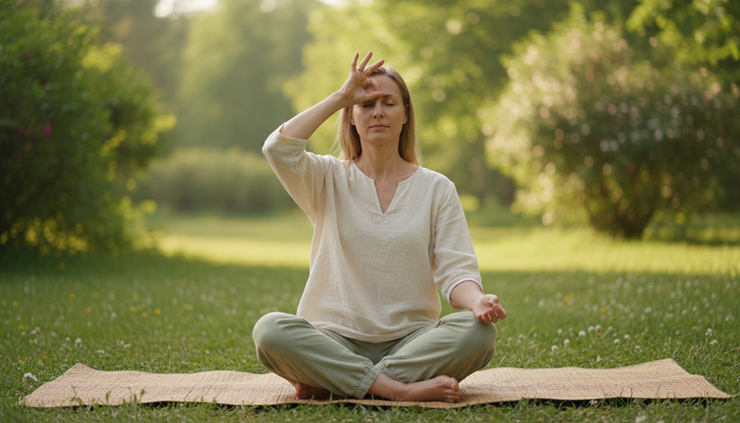
What alternate nostril breathing is
Alternate nostril breathing is a controlled breathing practice where you breathe in and out through one nostril at a time. You use your fingers to gently close the opposite nostril.
A basic round looks like this:
Breathe in through the left nostril.
Breathe out through the right nostril.
Breathe in through the right nostril.
Breathe out through the left nostril.
That full sequence counts as one round.
The practice asks for attention, but not force. The breath should feel smooth, quiet, and easy. If you feel strained, breathless, or tense, the pace is too slow or the effort is too high.
In yoga traditions, this technique is often described as a balancing breath. In modern terms, it can help create a pause between a stress trigger and your response. That pause may be the most useful part. Instead of rushing into the next thought or task, you come back to a steady inhale and exhale.
How to prepare before you start
You do not need much preparation, but a few small details make the practice more comfortable.
Choose a place where you can sit without rushing. Silence is helpful, but not required. A bedroom, porch, parked car, break room, or quiet spot outside can work.
Sit upright without getting stiff. You can sit on:
A chair with both feet on the floor
A cushion with legs crossed
A yoga mat
The edge of a bed
Let the shoulders drop. Keep the jaw soft. Rest the left hand on your thigh or in your lap.
Use the right hand to control the nostrils. Many people use this hand position:
Place the index and middle fingers lightly between the eyebrows, or fold them toward the palm.
Use the thumb to close the right nostril.
Use the ring finger to close the left nostril.
If that feels awkward, use any finger arrangement that lets you close each nostril gently. Comfort matters more than tradition.
Do not pinch hard. You only need light pressure at the soft part of the nostril. The goal is to guide the air, not block the nose aggressively.
If your nose is stuffy, blow it first. If one side stays fully blocked, skip the practice for now or use a modified version later in this guide.

How to do alternate nostril breathing step by step
Start with a short practice. Three to five minutes is enough for most beginners. Once it feels natural, you can extend it to 10 minutes.
1. Sit comfortably and lengthen your spine
Find a steady seat. Let your head sit over your ribs and your ribs sit over your hips. You do not need a perfect posture. Aim for open and relaxed.
Close your eyes if that feels safe. If not, soften your gaze toward the floor.
Take one or two normal breaths before you begin.
2. Exhale fully through both nostrils
Before starting the pattern, breathe out gently through both nostrils. This gives you a clean starting point.
Avoid pushing the air out. A relaxed exhale helps set the pace.
3. Close the right nostril and inhale through the left
Use your right thumb to close the right nostril. Inhale through the left nostril.
Count slowly if it helps. A count of 3 or 4 works well for beginners.
The inhale should feel smooth. If you need to gasp, shorten the count.
4. Close the left nostril and exhale through the right
At the top of the inhale, close the left nostril with the ring finger. Release the thumb from the right nostril.
Exhale through the right nostril for the same count, or slightly longer.
For example:
Inhale for 4
Exhale for 4
Or:
Inhale for 4
Exhale for 5 or 6
A slightly longer exhale can feel soothing, but only if it stays easy.
5. Inhale through the right nostril
Keep the left nostril closed. Inhale through the right nostril.
Use the same gentle count as before. Keep the shoulders relaxed.
6. Close the right nostril and exhale through the left
Close the right nostril with the thumb. Release the left nostril.
Exhale through the left nostril.
You have now completed one full round.
7. Repeat for several rounds
Continue for 5 to 10 rounds, or practice for 3 to 5 minutes.
The pattern is:
Inhale left
Exhale right
Inhale right
Exhale left
If you lose track, pause and breathe normally. Then begin again with an inhale through the left nostril.
8. Finish with normal breathing
After your final exhale through the left nostril, release both hands. Breathe naturally through both nostrils.
Notice how you feel before standing up. You may feel calmer, clearer, or simply more aware of your breath.
A simple beginner rhythm
A steady rhythm matters more than a long breath. Try this pattern at first:
Breath phase | Count |
Inhale | 4 |
Exhale | 4 |
Practice length | 3 minutes |
After a week or two, you may try a longer exhale:
Breath phase | Count |
Inhale | 4 |
Exhale | 6 |
Practice length | 5 minutes |
Skip breath holds when you are learning. Some advanced versions include holding the breath, but that is not necessary for the benefits most people want. Breath retention can feel uncomfortable and is not appropriate for everyone.

Key benefits of alternate nostril breathing
Breathing practices can affect people differently. Some benefits are immediate, like feeling more settled after a few minutes. Others come from regular practice over time.
It may help calm the stress response
Slow, controlled breathing can signal safety to the nervous system. When you breathe with attention, especially with a steady exhale, the body may shift away from a high-alert state.
This does not erase stress, but it can lower the intensity. That makes it easier to think clearly, speak calmly, or make a better choice in the next moment.
Try it when you feel the first signs of stress:
Tight jaw
Shallow breathing
Racing thoughts
Restless hands
A strong urge to react quickly
Even 6 rounds can create a useful pause.
It can improve focus before demanding tasks
Alternate nostril breathing gives the mind a simple job. Follow the sequence. Feel the air. Track the count. Return when distracted.
That makes it a useful reset before tasks that require attention, such as studying, writing, driving, practicing music, or preparing for a difficult conversation.
The benefit comes from the combination of breath control and attention. Instead of letting the mind scatter across several concerns, the practice narrows attention to one steady pattern.
It may support better sleep routines
Many people use alternate nostril breathing in the evening because it is quiet and low effort. It can become a cue that the day is winding down.
For sleep, keep the practice gentle:
Use a soft inhale.
Let the exhale be equal or slightly longer.
Practice in dim light.
Stop if the technique makes you too focused or alert.
Some people prefer to do it sitting on the bed before lying down. Others practice earlier in the evening, then move into reading or stretching.
It builds breath awareness
Many people do not notice how they breathe until they feel anxious, winded, or tense. This practice trains awareness without judgment.
You may notice that one nostril feels more open than the other. That is normal. Nasal airflow naturally shifts throughout the day. You may also notice that your breath changes with mood, posture, meals, or fatigue.
This awareness can carry into daily life. Once you recognize shallow breathing sooner, you can adjust sooner.
It offers a portable reset
One of the best things about this practice is how practical it is. You can use it almost anywhere that privacy allows.
It does not require a mat, music, an app, or a long routine. You can practice for a few minutes and move on with your day.
Good times to practice include:
Before checking email in the morning
After a commute
During a lunch break
Before a presentation or interview
After an argument
Before bed
Keep it simple. Regular short sessions usually work better than rare long ones.
Common mistakes and how to fix them
The practice should feel calm, not like a test. If it feels frustrating, one of these common issues may be getting in the way.
Pressing too hard on the nose
Use lighter pressure. If your nose feels sore afterward, you are pressing too firmly.
The fingers should rest gently. Think of closing a soft valve, not clamping shut a tube.
Breathing too slowly too soon
A long count can sound relaxing, but it may create strain. Start with a count of 3 or 4.
If you feel hungry for air, shorten the breath. Comfort comes first.
Lifting the shoulders
Shoulders often creep up during controlled breathing. Let them soften with each exhale.
You can also rest your elbow against your ribs or support it with your other hand if the arm gets tired.
Trying to force a blocked nostril
Do not fight congestion. If you have a cold, allergies, sinus pain, or nasal irritation, choose normal slow breathing instead.
You can return to alternate nostril breathing when airflow feels easier.
Practicing when dizzy or uncomfortable
Stop if you feel lightheaded, anxious, tingly, or short of breath. Breathe normally. Sit quietly until you feel steady.
Breathwork should support the body, not override its signals.
When to avoid or modify the practice
Alternate nostril breathing is gentle for many people, but it is not the right choice in every situation.
Avoid or pause the practice if you:
Have significant nasal congestion
Have a nosebleed or recent nasal injury
Feel dizzy or faint
Are short of breath
Have a respiratory infection
Feel panicky when focusing on the breath
Ask a clinician for guidance if you have asthma, chronic obstructive pulmonary disease, a heart condition, uncontrolled blood pressure, or a history of severe anxiety or panic symptoms.
A modified option is simple paced breathing through both nostrils:
Inhale through both nostrils for 4.
Exhale through both nostrils for 4 to 6.
Repeat for 3 minutes.
This gives you a steady rhythm without closing either nostril.

How often to practice
For most beginners, 3 to 5 minutes once a day is a good starting point. Practice at the same time each day if you want to build the habit.
Try this simple plan:
Week | Practice |
Week 1 | 3 minutes daily with a 4-count inhale and 4-count exhale |
Week 2 | 5 minutes daily with the same rhythm |
Week 3 | 5 minutes daily with a 4-count inhale and 6-count exhale if comfortable |
You can also use it as needed. A short session before a stressful event may be more helpful than waiting until tension peaks.
The signs of a good session are simple. Your breath feels smoother. Your face and shoulders feel softer. Your thoughts may still be present, but they feel less urgent.
A calm breath is a useful skill
Alternate nostril breathing is not complicated, and that is part of its value. Sit comfortably, use light pressure, follow the left-right pattern, and keep the breath easy. With practice, the sequence becomes familiar enough to use when you need a reset.
Start small. Try 3 minutes today with no breath holds and no pressure to do it perfectly. If you finish feeling even a little more settled, the practice is already doing its job.


Comments